
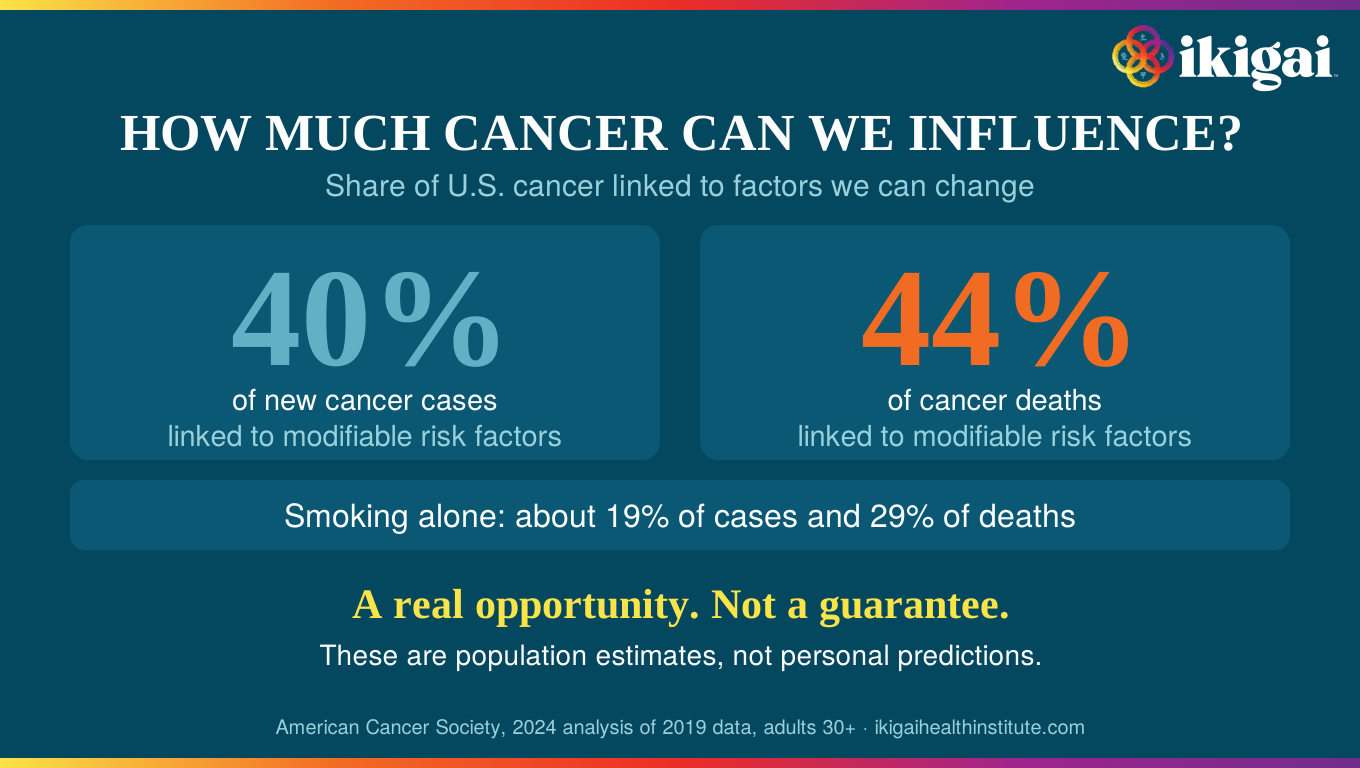
Yes, meaningfully, but not completely. A 2024 American Cancer Society analysis estimated that about 40% of new U.S. cancer cases and 44% of cancer deaths in adults 30 and older are linked to risk factors we can change. Those are population estimates, not personal predictions, but the best-supported steps are clear:
- Don't smoke, and quit if you do. Smoking was the largest single factor in the analysis.
- Limit alcohol. For breast cancer, no risk-free threshold has been established.
- Maintain a healthy body weight and stay physically active.
- Protect your skin from UV exposure and avoid indoor tanning.
- Stay current on HPV and hepatitis B vaccination, and ask whether testing for hepatitis C or H. pylori applies to you.
- Limit processed meat and favor fiber-rich whole foods.
- Keep up with recommended cancer screening.
- Don't count on supplements or a "cancer prevention pill." None has been proven to work for the general population.
What's in this post?
- How much of your cancer risk can you actually change?
- What are the biggest opportunities to lower your cancer risk?
- Can vaccines and infection treatment prevent cancer?
- What does metabolic health have to do with cancer?
- Could a pill prevent cancer?
- Why is your cancer risk personal, and how does it change over time?
- What is the realistic goal of cancer prevention?
Cancer has a way of making us feel powerless. We hear stories about people who never smoked, exercised regularly, ate well, and still developed the disease. We also know someone who smoked for 50 years and lived into their 90s without a cancer diagnosis. These stories challenge our instinct that good decisions should reliably produce good outcomes. They also raise an uncomfortable question: If cancer can strike someone who seems to do everything right, how much control do we really have?
More than you might think, although probably less than you would like.
How Much of Your Cancer Risk Can You Actually Change?
A landmark 2024 analysis from the American Cancer Society, published in CA: A Cancer Journal for Clinicians, estimated that approximately 40% of new cancer cases and 44% of cancer deaths among American adults aged 30 and older were attributable to potentially modifiable risk factors. Using data from 2019, researchers examined smoking, excess body weight, alcohol, physical inactivity, certain infections, ultraviolet radiation, and specific dietary factors, including processed meat and low fiber intake. The analysis excluded nonmelanoma skin cancers. Its findings suggest that a substantial portion of the nation's cancer burden is associated with factors we can potentially change.
That finding deserves perspective. It does not mean that following a healthy lifestyle will reduce your personal cancer risk by 40%, or that every cancer attributed to a risk factor could realistically have been prevented. These are population-level estimates, not individual predictions. Nor is the remaining 60% simply bad luck; the analysis did not capture every known cancer-causing exposure. Still, the message is remarkable: Cancer is not simply a matter of inherited genes or getting older. There are meaningful opportunities to influence risk, some supported by decades of evidence.
What Are the Biggest Opportunities to Lower Your Cancer Risk?
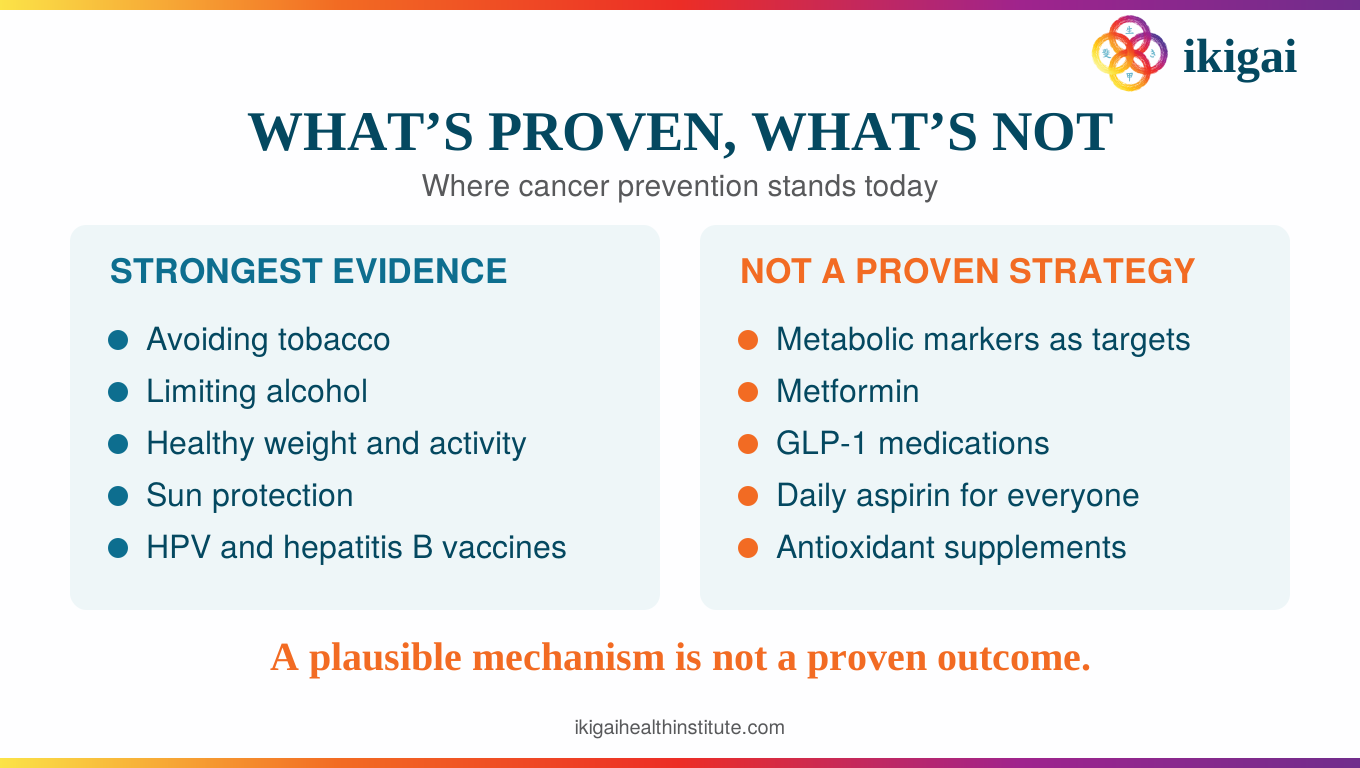
When people think about cancer prevention, they often imagine something sophisticated: a new blood test, an experimental medication, or a supplement targeting a molecular pathway. Yet some of the strongest evidence points toward decidedly unglamorous interventions. Avoiding tobacco, limiting alcohol, maintaining a healthy body composition, staying physically active, and protecting against certain infections and environmental exposures can influence cancer risk.
Is Smoking Still the Biggest Risk Factor?
Cigarette smoking remains the clearest example. In the American Cancer Society analysis, smoking accounted for approximately 19% of cancer cases and about 28.5% of cancer deaths, making it the largest contributor among the factors studied. Its relationship with lung cancer is well known, but tobacco also causes cancers of the bladder, pancreas, kidney, head and neck, esophagus, and other organs. Chemicals in tobacco smoke enter the bloodstream and can damage DNA far from the lungs. Quitting matters even after years of exposure because risk generally declines over time, although it may never return completely to that of someone who never smoked.
How Does Alcohol Affect Cancer Risk?
Alcohol is another exposure whose cancer implications are often underestimated. Many people associate drinking with liver disease, impaired judgment, or the occasional unpleasant morning. Far fewer appreciate that alcohol is an established cause of at least seven cancers, including breast, colorectal, liver, and cancers of the mouth, throat, and esophagus. This doesn't mean drinking inevitably leads to cancer, but it increases the likelihood of developing certain cancers, with risk generally rising as consumption increases. For breast cancer, measurable increases in risk have been observed at relatively modest consumption levels, with no established risk-free threshold.
That doesn't make every glass of wine a catastrophe, or mean people who enjoy alcohol should feel judged. Alcohol deserves the same intellectual honesty we apply to other health decisions. Reducing consumption lowers exposure to a known carcinogen, although direct evidence of reduced cancer incidence is stronger for some cancers than others. The familiar idea that a daily glass of red wine is inherently good for health deserves reconsideration. We explore alcohol's effects on the brain in our post on alcohol and cognitive decline.
Do Body Weight and Exercise Change Cancer Risk?
Excess body fat is associated with increased risk of at least 13 cancers, including colorectal, postmenopausal breast, endometrial, kidney, liver, and pancreatic cancers. Physical activity is associated with lower risk of several cancers, particularly breast and colorectal cancer, with benefits that appear to extend beyond weight control. Exercise may influence insulin regulation, inflammation, and other biological processes, although the contribution of each remains uncertain. Sustained, substantial weight loss has also been associated with fewer obesity-related cancers, but randomized prevention evidence remains limited. Fitness is also something you can measure rather than guess at, and we explain why VO2 max is such a powerful longevity predictor.
Does Sun Protection Really Matter?
Sun protection belongs in this conversation. Ultraviolet radiation accounted for an estimated 4.6% of cancer cases in the American Cancer Society analysis, more than physical inactivity. Repeated UV exposure damages DNA in skin cells, increasing the risk of melanoma and other skin cancers. Avoiding indoor tanning, seeking shade, wearing protective clothing, and using sunscreen reduce exposure. Randomized research has demonstrated reductions in certain skin cancers with regular sunscreen use, although melanoma findings come from relatively few cases. Enjoying the outdoors and protecting your skin are entirely compatible goals.
What Should You Eat to Lower Cancer Risk?
Nutrition illustrates why prevention advice deserves more nuance than a list of foods to avoid. Processed meats, including bacon, hot dogs, and cured deli meats, have convincing evidence linking regular consumption to colorectal cancer. Unprocessed red meat, such as beef and lamb, has also been associated with increased risk, but the evidence is less consistent. That distinction often disappears in blanket warnings against eating meat. Limiting processed meat and choosing whole grains more often are reasonable strategies, without suggesting that an occasional steak carries the same implications as regularly eating processed meat. The same analysis also counted low intake of fruits, vegetables, and dietary fiber among the factors examined, which is one reason a pattern built around plants and fiber-rich whole foods is a sensible starting point.
Do You Have to Be Perfect to Lower Your Risk?
The lesson is not that everyone must become lean, train like an athlete, or follow a rigid diet. Sustained patterns matter, and understanding which choices have the strongest evidence helps us focus on those most likely to contribute to long-term health.
Can Vaccines and Infection Treatment Prevent Cancer?
Some of the most effective cancer-prevention interventions have little to do with food or fitness. They involve preventing or treating infections that can initiate cellular changes years or decades before cancer becomes apparent.
Human papillomavirus, or HPV, is a striking example. Persistent infection with certain HPV types causes nearly all cervical cancers and contributes to cancers of the anus, penis, vagina, vulva, and oropharynx. HPV vaccination prevents infections responsible for many of these cancers, with compelling evidence that vaccination reduces cervical cancer incidence when given before exposure. Benefits are greatest at younger ages, and vaccinated individuals still need appropriate cervical screening.
Hepatitis B vaccination provides another example. Chronic hepatitis B infection can lead to liver cancer, sometimes without advanced cirrhosis. Preventing infection through vaccination reduces that risk. Hepatitis C has no vaccine, but effective antiviral treatment substantially reduces liver cancer risk, although people with advanced liver scarring still require surveillance after treatment. Similarly, Helicobacter pylori, a bacterium that can persist in the stomach for decades, causes gastric cancer. Identifying and treating it in appropriate patients can reduce future risk.
These examples broaden the way we should think about prevention. Understanding vaccination status, infection history, and whether testing or treatment is appropriate can reveal opportunities to interrupt biological processes that might otherwise lead to cancer.
What Does Metabolic Health Have to Do With Cancer?
Cancer cells do not develop in isolation. They exist within a body shaped by hormones, nutrients, immune signaling, inflammation, and surrounding tissues. Researchers are exploring how that internal environment influences whether abnormal cells emerge, survive, and progress into cancer.
Excess visceral fat, the fat accumulating around internal organs, is more than a passive energy reserve. It is biologically active tissue that can contribute to chronic inflammation, altered hormone signaling, and insulin resistance. When the body becomes less responsive to insulin, the pancreas often compensates by producing more. Insulin and related growth-signaling pathways influence how cells grow and survive, making them plausible contributors to cancer development.
The epidemiology supports a relationship between metabolic dysfunction and several cancers. Obesity is convincingly associated with increased risk across multiple cancer types, while type 2 diabetes is associated with higher incidence of certain malignancies, particularly liver and pancreatic cancer. These relationships require careful interpretation, however. Obesity and diabetes frequently coexist with other exposures, and an association does not establish which pathway is responsible. Cancer itself can sometimes alter metabolism, further complicating the picture.
The distinction is between understanding a mechanism and proving that changing it prevents disease. Improving metabolic health has established benefits, but we do not yet have evidence that achieving a particular fasting insulin concentration, continuous glucose monitor reading, inflammatory marker, or visceral fat measurement directly prevents cancer. These measurements can characterize metabolic health; they are not validated cancer-prevention targets.
The same caution applies to the popular claim that sugar feeds cancer. Cancer cells frequently consume large amounts of glucose, but so do healthy cells, including those in the brain and immune system. Eliminating dietary sugar does not deprive cancer cells of glucose because the body regulates blood glucose and can produce it when needed. That doesn't make excessive sugar consumption harmless. Sugary drinks can contribute to excess calorie intake and weight gain, both relevant to metabolic health. The biology is simply more complicated than eating sugar directly fueling a tumor.
For patients interested in longevity, the sensible approach is to improve metabolic health for its many established benefits while recognizing that its precise contribution to cancer prevention remains under investigation. Regular exercise, resistance training, adequate sleep, and thoughtful nutrition can improve insulin sensitivity and body composition, even as researchers continue studying how those improvements influence cancer risk.
Could a Pill Prevent Cancer?
The possibility is appealing. If metabolic signaling and cellular growth pathways contribute to cancer, perhaps medications or supplements that influence those pathways could lower risk. Researchers have investigated aspirin, metformin, vitamins, antioxidants, and newer obesity and diabetes medications. The results are more complicated than headlines suggest.
Aspirin offers an instructive example. Some studies suggest long-term use may reduce colorectal cancer incidence in certain populations, and aspirin has a role in selected people with inherited conditions such as Lynch syndrome. Yet it increases gastrointestinal bleeding risk and other serious complications. Trials involving older adults have raised further questions about its overall benefits and harms. Daily aspirin is not a universal cancer-prevention strategy.
Metformin has attracted attention because of its effects on glucose metabolism and insulin signaling. Observational studies have sometimes found lower cancer rates among people taking it, but randomized evidence has not established it as a general cancer-prevention medication. Newer GLP-1–based medications have generated similar interest through their effects on weight and metabolic health. Some observational findings are encouraging, but randomized trials have not yet demonstrated cancer prevention. Longer-term research is needed.
Supplements deserve comparable skepticism. Antioxidant vitamins might seem capable of protecting cells from DNA damage, but plausible theories do not always translate into better outcomes. Large trials have found no general cancer-prevention benefit, while certain high-dose supplements have increased risk in particular populations. Beta-carotene increased lung cancer risk in smokers, and vitamin E increased prostate cancer risk in a major trial.
Medical prevention can nevertheless be effective. Certain medications reduce breast cancer incidence in appropriately selected high-risk women, although they have not demonstrated a mortality reduction and can cause meaningful side effects. Effective prevention is often specific to a cancer, risk profile, and intervention. There is no established universal cancer-prevention pill, and promising mechanisms should not be mistaken for proven outcomes.
Understand your personal cancer risk.
Ikigai's physicians help you understand your personal risk, measure what matters, and build a plan that adapts as the evidence and your life change.
Why Is Your Cancer Risk Personal, and How Does It Change Over Time?
Two people can make similar lifestyle choices and face very different cancer risks. One may carry an inherited mutation increasing the likelihood of breast, ovarian, colorectal, or pancreatic cancer. Another may have decades of tobacco exposure, occupational exposures, or chronic viral infection. A third may have none of these recognized factors and still develop cancer.
Environmental risks can be less obvious than smoking or sun exposure. Radon, a naturally occurring radioactive gas that accumulates inside some homes, is a major cause of lung cancer, including among people who have never smoked. Testing a home is a relatively simple way to identify an exposure that can often be reduced. Outdoor air pollution is another established lung carcinogen, although individuals generally have less control over it.
Age remains a major influence because the processes contributing to malignancy unfold over time. Cells accumulate genetic changes, immune function changes, and past exposures may not become apparent for decades. Family history and inherited genetics can further alter the picture, sometimes dramatically. These are not failures of lifestyle or reasons to abandon prevention. They are reasons to understand risk more precisely.
Prevention should not be confused with screening. Reducing exposure to a carcinogen may lower the probability that cancer develops. Screening can identify cancer or precancerous changes before symptoms appear. Colonoscopy and cervical screening can prevent some cancers by identifying and treating precancerous changes. Other approaches, such as mammography, primarily aim to find cancer when treatment is more effective. Which screening tests make sense for you depends on your age, sex, and family history, so it's worth reviewing them with your physician, including colonoscopy, mammography, cervical screening, and, for eligible people with a significant smoking history, lung cancer screening.
At Ikigai, we view these efforts as parts of a continuous process rather than isolated decisions. Personal risk informs which exposures deserve attention, which preventive interventions are appropriate, and how early detection should evolve. A person's risk at 40 is not necessarily their risk at 60. New diagnoses, family history, accumulated exposures, and emerging evidence can all change the conversation.
Cancer prevention is not a single decision, a particular diet, or a medication taken every morning. It is a way of life shaped by decisions sustained over years, informed by established science and adjusted as new evidence emerges. The goal is not to eliminate every conceivable risk, but to understand which risks matter and make thoughtful decisions about those we can influence.
What Is the Realistic Goal of Cancer Prevention?
Cancer prevention presents an uncomfortable truth: We can influence probability without controlling the outcome. Someone who never smokes may still develop lung cancer. Someone who exercises, maintains a healthy weight, and rarely drinks alcohol may still develop breast or colorectal cancer. Conversely, someone with substantial risk factors may never receive a diagnosis. Individual stories cannot tell us whether a prevention strategy works; that requires studying outcomes across large populations over time.
What the evidence tells us is encouraging. A meaningful share of cancer is associated with factors we can influence, and some preventive interventions have demonstrated substantial benefits. Others are biologically promising but remain unproven. Understanding the difference helps us focus on opportunities that matter rather than chasing every new theory or headline.
We cannot guarantee a future without cancer. But we can make informed decisions that improve the odds, revisit those decisions as science evolves, and pair prevention with thoughtful early detection. That is a more realistic—and ultimately more empowering—way to approach cancer risk.
Take the Next Step
Ikigai's physicians help you understand your personal risk, measure what matters, and build a plan that adapts as the evidence and your life change.
Schedule a Consultation — talk with an Ikigai physician about your personal risk.
Recommended Reading
- Identifying Your Personal Risk
- Insulin Resistance and Long-Term Risk
- Alcohol and Cognitive Decline
- VO2 Max: Your Ultimate Longevity Predictor
- What Is Longevity Medicine?
- Lifespan vs. Healthspan
References
- Islami F, Marlow EC, Thomson B, et al. Proportion and number of cancer cases and deaths attributable to potentially modifiable risk factors in the United States, 2019. CA Cancer J Clin. 2024;74(5):405-432. doi:10.3322/caac.21858
- American Cancer Society. New study finds 40-percent of cancer cases and almost half of all deaths in the U.S. linked to modifiable risk factors. Press release, July 11, 2024.
- National Cancer Institute. Alcohol and Cancer Risk.
- Centers for Disease Control and Prevention. Vital Signs: Trends in Incidence of Cancers Associated with Overweight and Obesity — United States, 2005–2014. MMWR. October 6, 2017;66(39).
This article is for educational purposes only and is not medical advice. It does not establish a physician-patient relationship. Cancer risk and screening decisions depend on your age, family history, and medical history, so talk with your physician about what is right for you.